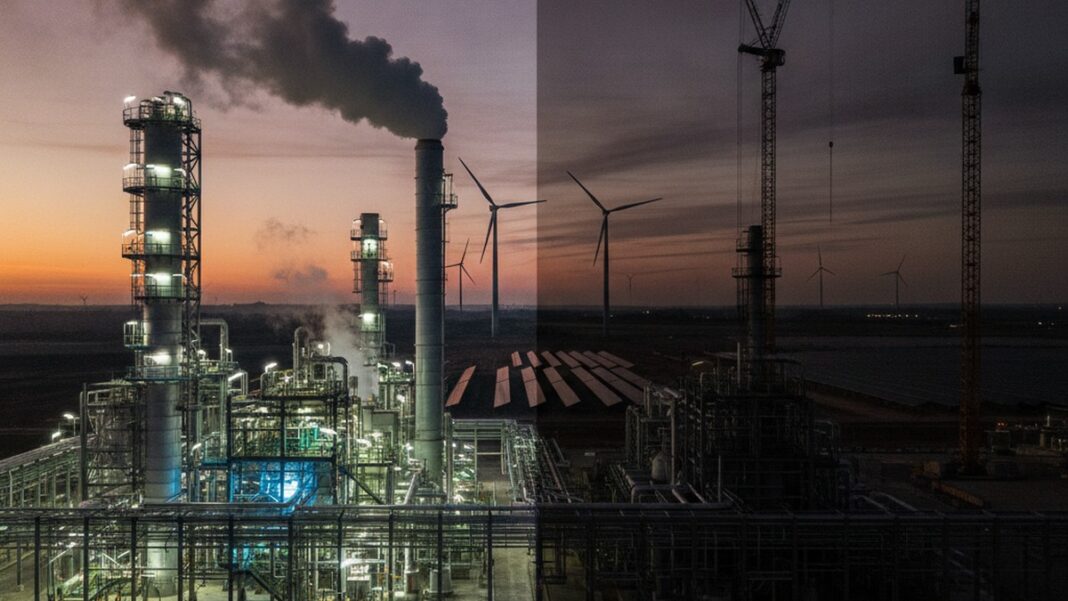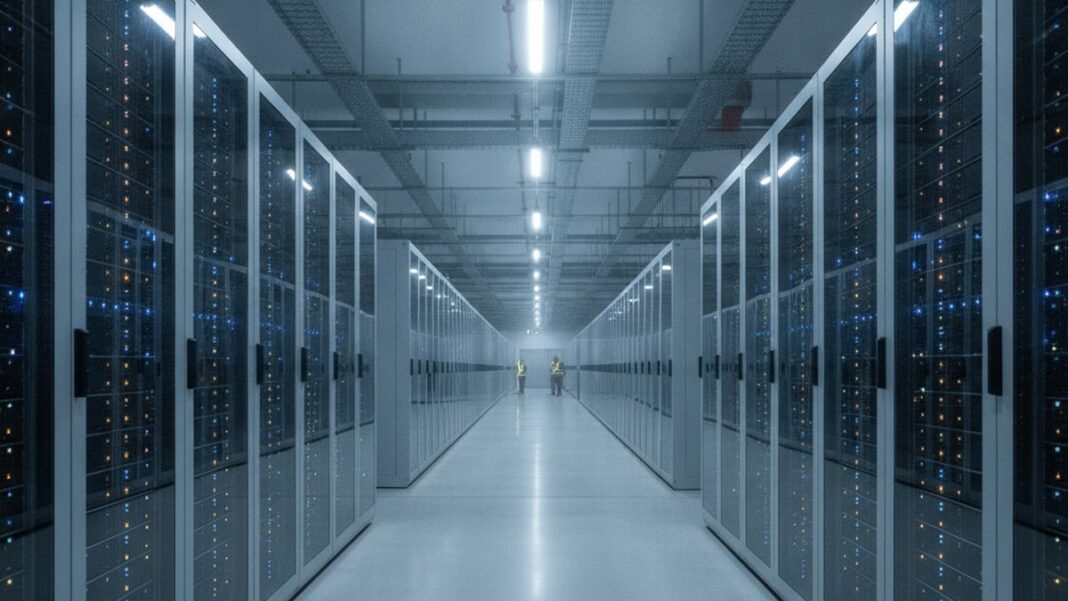

In November last year, Satya Nadella said something that should have unsettled every boardroom running an AI strategy, not just Microsoft’s. Asked why Azure’s AI capacity wasn’t scaling as fast as demand, the Microsoft CEO didn’t blame Nvidia, TSMC, or a shortage of engineers. “The biggest issue we are now having is not a compute glut, but it’s power,” he said, adding that Microsoft might “actually have a bunch of chips sitting in inventory that I can’t plug in.” Weeks later, on Microsoft’s own earnings call, CFO Amy Hood confirmed the company had been short on space and power for several consecutive quarters, despite spending $11.1 billion on data centre leasing in a single quarter.
Sit with that for a moment. The best-capitalised AI company on earth, run by one of the most disciplined operators in technology, was describing a scenario in which capital was no longer the constraint. Silicon was sitting in warehouses. The bottleneck was electricity, and more specifically, the physical infrastructure required to move it from a power plant to a server rack. That is not a software problem. It cannot be patched, retrained, or fine-tuned away. It is a civil-engineering and industrial-manufacturing problem, and it runs on a completely different clock than the one most executives have been using to think about AI.
The clock that actually governs AI now
For three years, the working assumption inside most companies has been that AI capability scales with chip supply and capital. Get enough GPUs, spend enough on training runs, and advantage follows. That assumption is quietly breaking down, and the evidence for why is not speculative. The International Energy Agency’s Electricity 2026 report puts global electricity demand growth at 3.6 percent annually through 2030, roughly 50 percent faster than the previous decade, with data centres driving half of all demand growth in the United States alone. More tellingly, the IEA finds more than 2,500 gigawatts of generation and infrastructure projects stuck in grid connection queues worldwide, a backlog larger than the entire installed generating capacity of the United States.
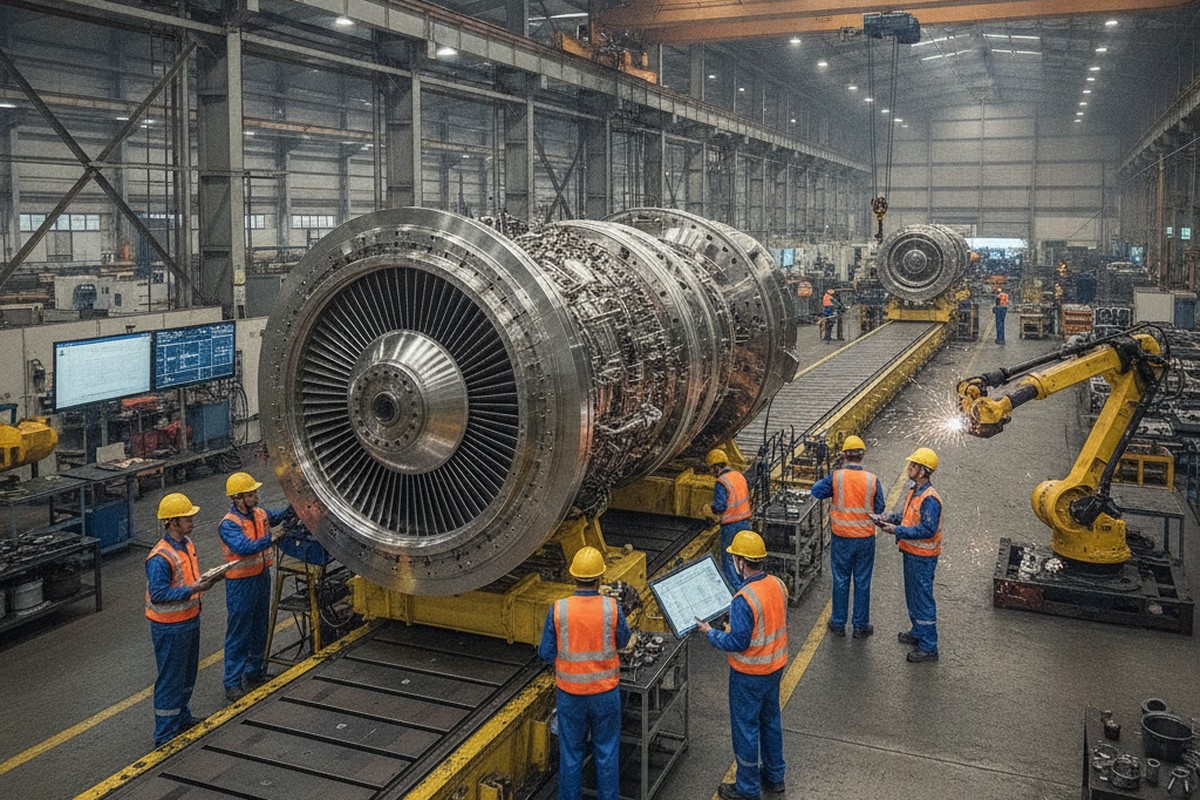
Turbines tell the same story with more precision. GE Vernova, the dominant global supplier of gas turbines alongside Siemens Energy and Mitsubishi Heavy Industries, reported its order backlog had reached 116 gigawatts by the second quarter of 2026, up from 100 gigawatts just one quarter earlier. The company is already booking turbine reservations for 2031. Data centres account for roughly a fifth of that backlog and growing, but the more important number is the lead time itself: four to five years from order to delivery, regardless of how much a customer is willing to pay. Nvidia’s product cycle moves in roughly twelve-month increments. The industrial base that has to power Nvidia’s chips moves in five-year increments. That mismatch, not model architecture or chip design, is now the effective constraint on how fast AI capacity can actually be deployed.
Why the hyperscalers are becoming power companies
The response from the largest technology companies has been telling. Rather than wait for utilities and grid operators to catch up, they are integrating backwards into energy generation itself, at a scale and speed that would have been unthinkable for software companies five years ago. Microsoft signed a twenty-year, $16 billion agreement with Constellation Energy to restart the Three Mile Island reactor, targeting commercial operation in the second half of 2027. Amazon has committed to nearly 2 gigawatts from Talen Energy’s Susquehanna nuclear plant through 2042 while also leading a $700 million investment round in X-energy’s small modular reactor programme. Google has contracted with Kairos Power for up to 500 megawatts across a fleet of small modular reactors, the first such corporate commitment of its kind. Meta’s portfolio of deals with TerraPower, Oklo, Vistra and Constellation now totals roughly 6.6 gigawatts. Across the four companies, the combined nuclear commitment approaches 10 gigawatts, spread across more than a dozen separate transactions.
This is a genuinely unusual moment in industrial history: a handful of software companies with no prior utility experience are now among the most consequential buyers in global energy markets, willing to underwrite reactor restarts and reactor fleets on multi-decade contracts because that is the only way to guarantee the one input that determines whether their capital expenditure on chips actually produces usable capacity. The strategic logic has inverted. Access to a data centre’s worth of firm, contracted power for the 2030s has become a scarcer and more defensible asset than access to next year’s GPU allocation, which is precisely why the companies with the deepest existing relationships in energy, land and permitting, rather than the deepest AI research benches, may end up controlling a disproportionate share of usable AI capacity through the end of the decade.
The externality nobody priced in
There is a second-order consequence here that most boards have not fully absorbed: data centres are now out-bidding utilities and industrial customers for the same finite turbine and interconnection capacity, and in doing so, are pushing costs onto electricity consumers who have nothing to do with AI. Wholesale power prices in parts of the US grid serving heavy data centre clusters have risen sharply over the past two years as new demand collides with a slow-moving supply base. Any executive running an energy-intensive business, whether that is a chemicals plant, a foundry, a hospital network, or a hotel chain, is now effectively competing with hyperscalers for grid capacity and equipment slots, often without realising it. Electricity strategy, treated for decades as a procurement afterthought, has become a genuine competitive variable for companies that have never thought of themselves as being in the energy business.
India’s parallel bet, and why it may age better
India offers an instructive counterpoint. The country’s data centre capacity is projected to grow from roughly 1.4 gigawatts to around 9 gigawatts by 2030, lifting data centres from under 1 percent to roughly 3 percent of national electricity consumption, concentrated heavily around five hubs: Mumbai, Hyderabad, Delhi NCR, Bangalore and Chennai. A single large facility can draw as much power as an aluminium smelter, or roughly 100,000 homes, which is straining local distribution networks built for very different load profiles.
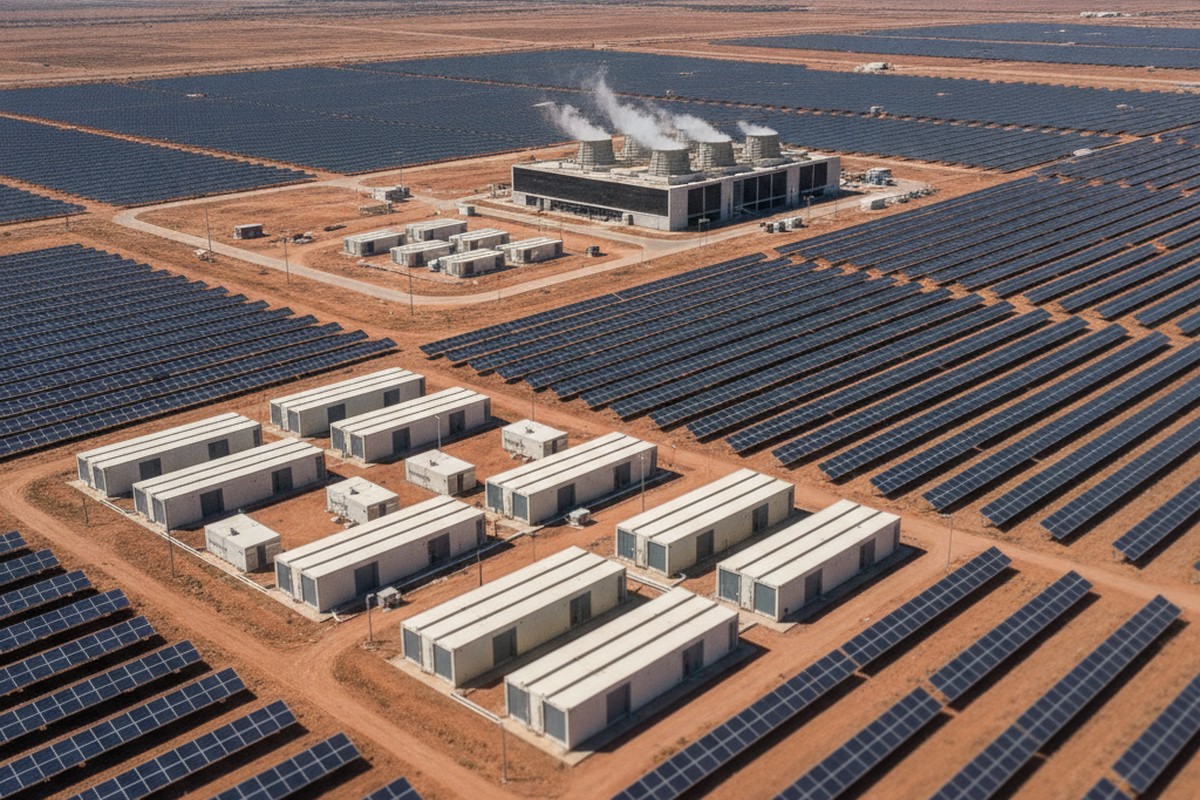
New Delhi’s response has diverged meaningfully from Washington’s. Rather than leaning on nuclear restarts, which face their own long lead times, the Ministry of Power’s Electricity (Amendment) Rules, 2026, which took effect in March, relaxed the ownership rules governing captive power plants. Corporate groups can now aggregate equity across subsidiaries and holding companies to meet the 26 percent ownership threshold required for captive status, rather than requiring a single entity to hold it directly, and the rules explicitly recognise hybrid solar-plus-storage captive configurations. The commercial effect is significant: captive structures avoid cross-subsidy and additional surcharges worth an estimated ₹1 to ₹3 per unit for large industrial users. With firm renewable-plus-storage tariffs now around ₹4.98 to ₹4.99 per unit, undercutting median gas-based power at roughly ₹5.40, India’s large power consumers, data centre operators included, have a genuine economic incentive to build renewable captive capacity rather than simply queue for grid connections or gas allocations that are constrained by import dependence covering half the country’s gas needs.
The comparison is not simply about which country builds faster. It is about which model is more resilient to the exact bottleneck now defining the sector. Nuclear restarts and small modular reactors solve the problem on a timeline measured in years and at a capital scale only a handful of companies can underwrite. Renewables paired with storage, built under a lighter regulatory structure, can be deployed in a fraction of that time and at a lower cost base, which is precisely the kind of asymmetry that tends to matter more once an industry stops being capital-constrained and starts being time-constrained.
What this means for the executives not in the room
The practical implication for any CEO, not just those running technology companies, is that energy strategy now belongs on the same list as capital allocation, talent and cybersecurity as a determinant of competitive position. Companies planning multi-year digital infrastructure investments need to be asking their teams not only which cloud provider or model vendor to commit to, but where that provider’s power actually comes from, how firm those commitments are, and what happens to service reliability and pricing if the grid serving that region comes under strain from a neighbouring hyperscaler’s expansion. For a growing number of industries, the more durable competitive advantage over the next five years will not belong to whoever has the best model. It will belong to whoever secured the electrons first.