
In the same quarter this year, Air Products and Chemicals made two decisions that looked contradictory and were not. It walked away from its Louisiana Clean Energy Complex, a blue hydrogen project years in the making, taking a pre-tax charge of up to $2.9 billion and shutting a companion liquid hydrogen facility in Arizona. Around the same time, it kept pushing forward, at full pace, on a 2.2-gigawatt green hydrogen and ammonia project at NEOM in Saudi Arabia, anchored by a 30-year, fixed-price agreement covering everything the plant will produce. Same company, same underlying technology, opposite verdicts. The difference had almost nothing to do with engineering, catalysts, or electrolyser efficiency. It had to do with whether anyone had signed a contract to buy the output before the concrete was poured.
That distinction is the real story inside what is being loosely reported as a “hydrogen bust.” It isn’t one. Global capital spending on low-emissions hydrogen is on track to reach roughly $10 billion in 2026, nearly double the 2024 figure, according to the International Energy Agency’s Global Hydrogen Review. Electrolysis has overtaken carbon-capture-based hydrogen as the preferred technology route, on the strength of a deeper project pipeline. Public money is flowing too: international finance commitments to emerging economies, negligible in 2022, had reached roughly $3.3 billion by the first quarter of this year. None of that reads like collapse. What has collapsed is the assumption that an announcement equals a project.
The industry’s own numbers give this away. The pool of projects with firm 2030 production commitments has actually edged up slightly, but the broader pipeline of announced capacity has shrunk by around 10 million tonnes in a single year, down to roughly 27 million tonnes. More than 100 gigawatts of announced electrolyser capacity now needs a final investment decision before the end of 2027 simply to have a chance of running by 2030 — and analysts tracking the sector openly expect most of it never will. The Australian Renewable Energy Hub, once billed at 26 gigawatts, has been quietly rescoped down to 1. Woodside has abandoned the clean-energy strategy it built around a roughly $5 billion allocation. These are not fringe projects. They were, until recently, the flagship examples cited in every consultancy deck about the coming hydrogen economy.
The Announcement Economy Meets a Real Deadline
What changed is not the physics of electrolysis or the cost curve for renewable electricity, though both matter. What changed is that 2027 is close enough now that developers, lenders, and boards actually have to write the cheque, not just the press release. For several years, a green hydrogen announcement was a low-cost way for an energy major, a sovereign fund, or a state government to signal seriousness about decarbonisation. Capital markets rewarded the signal. Very little of it required near-term capital outlay, because final investment decisions were, by construction, still years away. That grace period is now expiring across the industry simultaneously, and it is forcing a sorting exercise that should have happened at the announcement stage rather than five years later.
The sorting mechanism turns out to be almost boringly simple: does the project have a buyer under contract, or does it have a market forecast. Every project still standing after this shakeout — NEOM’s ammonia complex, several fertiliser-linked plants in the Middle East and North Africa, a handful of refinery-adjacent electrolyser projects in Europe — shares one structural feature. It sells into an existing, liquid commodity market (ammonia, methanol, refinery-grade hydrogen) through a long-duration contract with an industrial buyer who already needs that molecule for something else. Every project that has been cancelled or radically downsized was, in effect, betting that a new category of demand would materialise on its own: hydrogen-fuelled trucking corridors, hydrogen power generation, hydrogen home heating, or export markets that assumed someone else would build the ships and terminals first. Air Products did not lose faith in hydrogen chemistry between one write-off and one green-lit project in the same quarter. It lost faith in demand that had never been contracted, and kept faith in demand that had.
India Built the Supply Side and Left Out the Demand Side
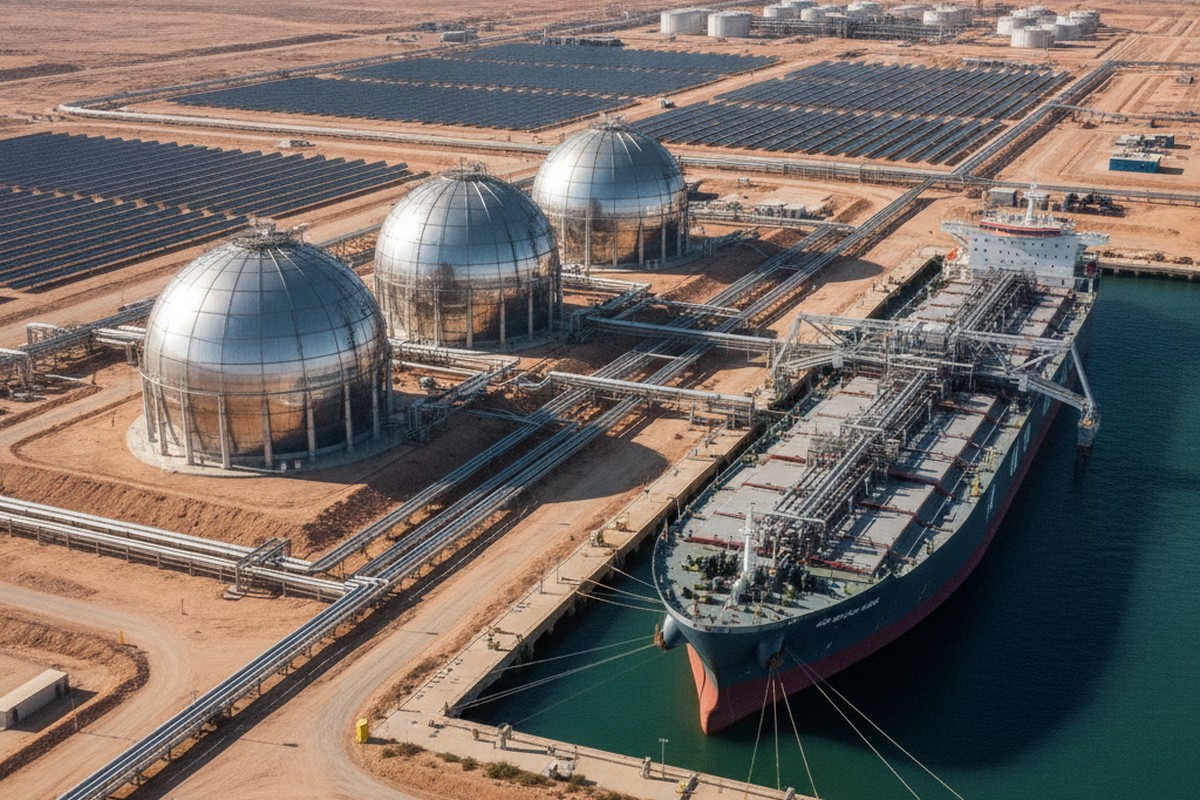
India’s National Green Hydrogen Mission is a useful, slightly uncomfortable illustration of the same error playing out with public money instead of shareholder capital. Approved by the Union Cabinet in January 2023 with an outlay of roughly Rs 19,744 crore through FY2029-30, the mission targets 5 million tonnes of annual green hydrogen production by 2030, underpinned by 125 gigawatts of dedicated renewable capacity and an anticipated Rs 8 lakh crore in total investment. As of February 2026, commissioned capacity stood at around 8,000 tonnes a year — roughly 0.16 percent of the 2030 target, with four years left on the clock. Cumulative spending under the mission has come in at close to 1.3 percent of the approved outlay, even as nineteen companies hold production-linked incentive allocations under the SIGHT scheme covering 17.2 percent of the eventual target.
That gap between allocated incentive and commissioned tonnage is not primarily a story about slow bureaucracy, though there is some of that too. It reflects a mission designed almost entirely around supply-side economics: electrolyser manufacturing subsidies, production-linked incentives, hydrogen hubs at major ports. What it does not yet contain is a binding demand-side instrument — a blending mandate for fertiliser or refining, a minimum-procurement obligation for public-sector undertakings, a notified timeline forcing any specific industry to buy at any specific price. Green hydrogen discovered through India’s own competitive bidding currently runs to roughly Rs 387-397 a kilogram at the refinery gate, well above conventional grey hydrogen, with renewable power alone accounting for half to two-thirds of that cost. Absent a mandate or a matching offtake commitment, that price gap simply sits there, unresolved, while the subsidised manufacturing capacity waits for someone to need it. It is the NEOM logic in reverse: India built an impressive supply apparatus first and is still waiting for the demand-side commitment that, elsewhere, has to exist before capital moves at all.
The Mistake Travels Well Beyond Hydrogen
The uncomfortable part for executives sitting well outside the hydrogen industry is that this is not a hydrogen-specific failure mode. It is a generic failure mode of transition-era capital allocation, and hydrogen is simply the sector far enough along its investment cycle to have hit the wall first. Green steel plants across Europe are being sanctioned on the strength of government grants and customer “memoranda of understanding” that fall well short of binding offtake. Sustainable aviation fuel capacity is being built ahead of any airline commitment that specifies volume, price, and duration rather than an aspiration. Grid-scale battery storage and EV charging networks in several markets, India included, have followed a similar sequence: subsidise the asset, assume the utilisation will follow. Hydrogen is not an outlier case study. It is the early warning.
The discipline this argues for is not caution about climate technology, and it is not a case for waiting on the sidelines until a market fully matures. It is a specific underwriting standard, closer to project-finance logic than to venture logic: before capital is committed to a transition-technology asset, someone at the table should be able to name the buyer, quote the contract length, and state the price — not the addressable market size, not the policy tailwind, not the technology roadmap. Boards approving decarbonisation capex, and public officials designing mission-mode industrial policy, are both prone to the same substitution: treating a credible technology as though it were already a credible market. The hydrogen shakeout of 2026 is simply the moment that substitution became visible, at a cost of several billion dollars and counting. The more useful question for any executive with a transition-capex line on next year’s budget is not whether the technology works. It is who has signed, and for how long.