


In May 2025, Suzuki quietly halted production of the Swift, one of its highest-volume cars, because it could not get hold of enough rare earth magnets. A few months later, Ford idled a plant for the same reason, and its CEO told Bloomberg that magnet supply had become a “day to day” problem rather than a planning one. These are not fringe suppliers caught out by a one-off shock. Ford and Suzuki are two of the best-run manufacturing organisations on the planet, with procurement functions built specifically to prevent this kind of surprise. They got caught anyway, and the reason why should worry any CEO who has quietly filed “rare earths” under geopolitical background noise rather than balance sheet risk.
Since Beijing’s first restrictions on heavy rare earth exports in April 2025, the corporate and policy response has been swift, well-funded and almost entirely aimed at the wrong layer of the problem. Washington has mobilised more than $7.3 billion across five agencies. The Pentagon took a 15% equity stake in MP Materials and locked in a ten-year price floor of $110 a kilogram. Australia, Saudi Arabia, Malaysia and Brazil have all signed critical minerals frameworks with the United States. India approved a ₹7,280 crore rare earth magnet scheme in November 2025 and, in this year’s budget, designated four dedicated rare earth corridors across Odisha, Kerala, Andhra Pradesh and Tamil Nadu. Read the press releases and you would conclude the world is finally weaning itself off Chinese rare earths through sheer weight of capital.
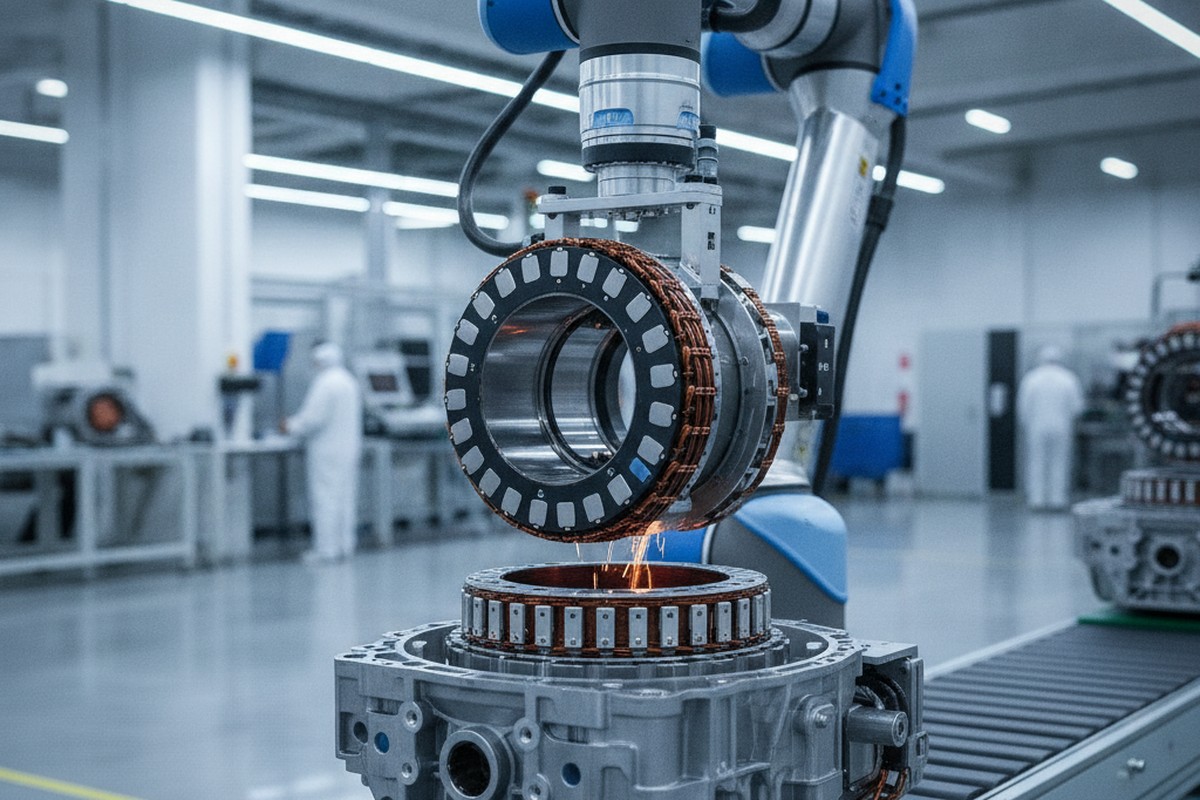
Read the underlying numbers and a different picture emerges. China controls around 60% of global mined production of magnet rare earths, which sounds like a gap that money and geology can close. But it controls 91% of refined output and 94% of finished sintered magnet manufacturing, up from roughly half in 2005. The dependency has been climbing, not narrowing, at every stage further down the value chain from the mine. Nearly every diversification dollar announced in the last eighteen months has gone toward the stage where China’s grip is weakest. Almost none of it addresses the stage where China’s grip is near-total.
Why refining, not mining, is the real chokepoint
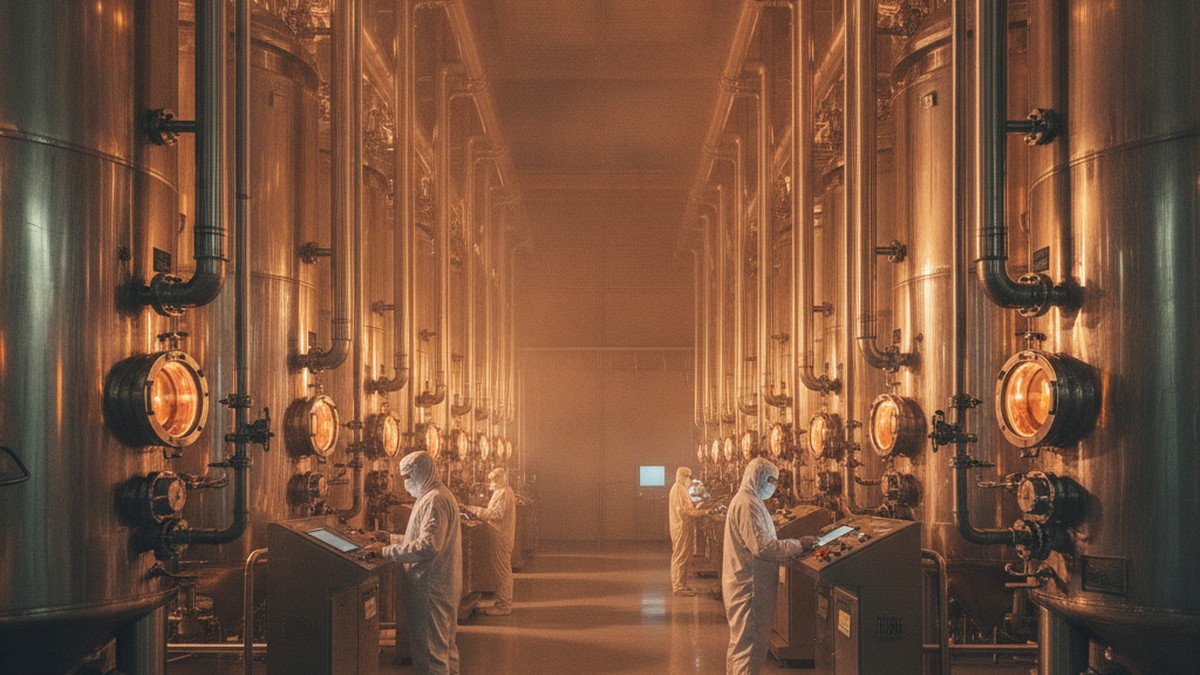
This is the mistake worth naming plainly: treating rare earths as a mining problem when they are, in practice, a chemistry and equipment problem. Extracting a rare earth oxide from ore is a mining exercise. Separating that ore into the individual elements, dysprosium from terbium from neodymium, each with near-identical chemical properties, requires cascades of hundreds of solvent extraction stages tuned over decades of accumulated process engineering. It is closer to semiconductor lithography than to digging a hole. China did not simply out-mine the rest of the world; it out-engineered it, and then built the specialised equipment, extractant chemistry and metallurgical know-how that the entire separation process depends on.
That distinction has just become the whole story. On 10 November 2026, China’s Announcement No. 61 extends licensing requirements beyond raw materials to the equipment and technology used for rare earth separation, strip alloy production and magnet manufacturing itself. Mkango Resources’ Nielson Beddoe has noted that Chinese separation equipment costs roughly a third of Western alternatives, which is precisely why so many of the new “ex-China” refining projects have quietly depended on Chinese machinery and expertise to get built. The new controls threaten to cut off the tools being used to build independence from the supplier of those tools. Every mine that came online in Australia, Brazil or India over the past two years still needs somewhere to send its ore for separation, and the number of facilities capable of doing that work outside China remains a short list.
The price data already shows what a chemistry monopoly looks like in practice, and it is not a temporary spike. By August 2026, dysprosium oxide in Europe was trading at roughly 4.9 times its Chinese domestic price, and terbium oxide at 3.8 times. Japan, the largest non-Chinese buyer of these materials, received zero dysprosium or terbium oxide exports from China at all during 2026. That is not a market clearing at a higher price; it is a market that, in parts, is not clearing at all. Any CEO in automotive, wind energy, robotics, defense electronics or precision motors who is still modelling magnet costs off last decade’s price curve is underwriting a strategic plan with a number that no longer exists.
India’s opening, and its trap
India’s position here is more interesting than the celebratory budget language suggests, and worth examining on its own terms rather than as an afterthought to the US-China story. The country holds 13.15 million tonnes of monazite containing an estimated 7.23 million tonnes of rare earth oxides, spread across coastal sands in eight states, one of the largest resource bases outside China. IREL’s extraction operation in Odisha and refining unit in Kerala are decades old, but historically undersized relative to the reserve. The new REPM scheme and the four rare earth corridors are a genuine attempt to move up the value chain rather than simply exporting concentrate, and bilateral mineral agreements with Australia, Argentina, Zambia and Mozambique through KABIL show a deliberate effort to secure feedstock beyond domestic reserves too.
The trap is that India risks reproducing, at a national scale, exactly the error the rest of the world is making at a corporate one: building mining and rough-processing capacity while the separation and magnet-manufacturing layer, the layer that actually captures the value and the strategic leverage, remains dependent on imported equipment and technology that a supplier can now license or withhold at will. A rare earth corridor that produces concentrate for export is a feedstock business. A rare earth corridor that produces sintered magnets for India’s own electric vehicle, defense and renewable energy sectors is a strategic asset. The difference between the two is entirely a function of whether the separation chemistry and equipment access materialise, and that is precisely the layer November’s controls are designed to make harder to acquire from outside China.
What this means at the board table
Three implications follow for executives well beyond the mining and metals sector. First, rare earth exposure needs to move from a procurement footnote to a board-level risk disclosure for any company whose products depend on permanent magnets, and that list is longer than most boards realise: it includes EV drivetrains, wind turbines, MRI machines, precision-guided weapons, and increasingly the actuators inside humanoid robots. Second, the MP Materials structure, a government-backed price floor paired with a long-term offtake agreement, is a more realistic template for corporate risk management than a diversified supplier list, because it addresses price volatility directly rather than assuming volume diversification alone will tame it. Third, investors and dealmakers evaluating anything described as a “rare earth play” should ask which layer of the chain a company actually occupies. A mining asset and a separation-and-magnet asset carry entirely different risk profiles and entirely different moats, and the market has been pricing many of them as though they were interchangeable.
The circular economy escape hatch is narrowing too. The United States restricted exports of black mass and end-of-life magnets in July 2026, precisely the recycled feedstock that companies like HyProMag were counting on to route around the mined-ore bottleneck altogether. When even the scrap is becoming a contested resource, the lesson is not that diversification has failed. It is that the world diversified the layer that was never actually scarce, and left the layer that is.

