
In a data-annotation centre outside Bengaluru, a worker earning perhaps $30 an hour puts on a haptic glove and teleoperates a robotic arm through the motions of folding a shirt, stacking a shelf, or sorting a bin of mixed parts. The footage becomes training data for a foundation model that, within a few years, will let a humanoid robot perform that same task on its own, somewhere else, for someone else, at a fully loaded cost that keeps falling. The worker is, in effect, paid to make their own job category more replaceable, just not necessarily their own job, and not necessarily in India. That contradiction, largely invisible in the current excitement about India’s robotics and AI-services boom, is worth sitting with, because it says more about where global manufacturing competitiveness is actually heading than most boardroom conversations about humanoid robots currently do.
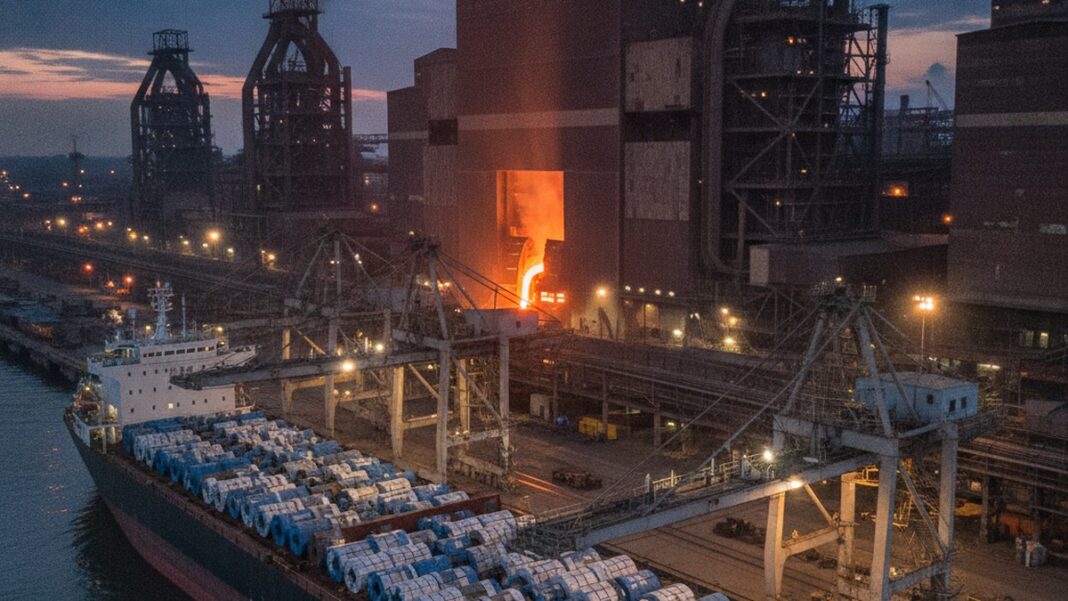
The dominant narrative around embodied AI runs in a straight line: robots get cheaper, robots get more capable, robots eventually replace cheap human labour, therefore countries built on cheap human labour should worry. Applied to India, whose entire industrial policy of the last five years rests on absorbing manufacturing capacity leaving China, this sounds like an existential threat arriving on schedule. It is the wrong way to read the data. The more precise and more uncomfortable read is that humanoid robots are not coming for India’s factory floor first. They are coming for America’s, China’s, and Mexico’s, and the reason that matters is that it could close the reshoring window India is trying to walk through before India has finished walking through it.
The economics run backwards from the popular fear
Start with what a humanoid robot actually costs to run today. Figure AI, Agility Robotics, Tesla, and a cluster of Chinese manufacturers led by UBTECH, AgiBot, and Unitree have pushed unit prices for a general-purpose humanoid down to roughly $115,000 in 2026, with most forecasts (IDTechEx among them) putting that closer to $37,000 by 2030 as battery, actuator, and compute costs fall along a curve familiar from electric vehicles and solar panels. More consequential than the purchase price is the emergence of robotics-as-a-service: Agility’s deployment at Schaeffler’s South Carolina plant runs on a leased model priced at roughly $10 to $25 an hour, against what the company itself frames as a comparison point of about $20 an hour for an entry-level American factory worker. IDTechEx puts payback periods at six months under high utilisation and around fifteen months on average. UBTECH alone has booked more than 800 million yuan, north of $110 million, in orders from BYD, Foxconn, Geely, FAW-Volkswagen, and SF Express. Global humanoid installations reached roughly 16,000 units in 2025, more than 80 percent of them in China, with credible projections of over 100,000 cumulative units by 2027.
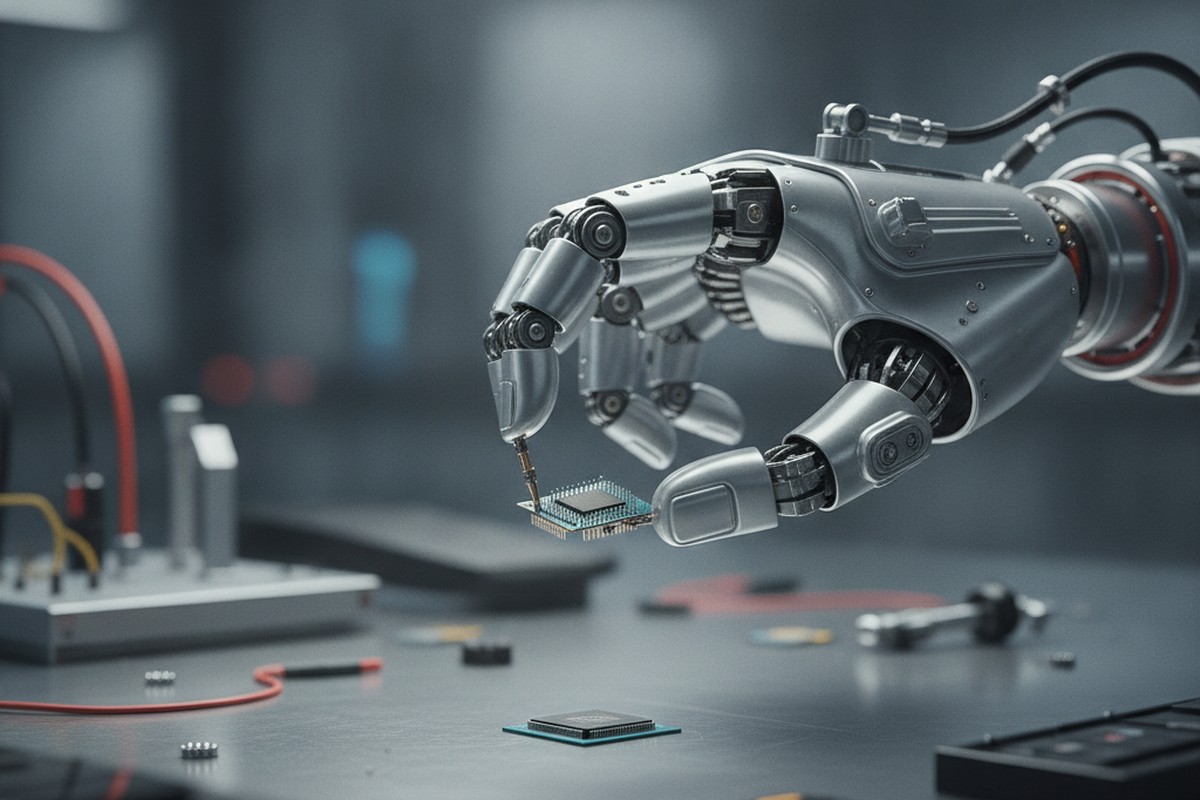
Now put an Indian factory wage next to that: roughly $1 an hour, against China’s $5.60 and a developed-market rate of $20 to $30. At today’s robotics-as-a-service pricing, a humanoid is not remotely competitive with Indian manual labour. It is, however, already competitive with Chinese labour, and comfortably cheaper than American or European labour. That is precisely why the early, real-world deployments are happening on assembly lines in South Carolina, Ontario, and Guangdong, not in Tamil Nadu or Uttar Pradesh. The robot’s first economic argument is being made against the workforce India was trying to take share from, not the workforce India has.
Why a threat that skips India first is still a threat to India
The entire logic of the last decade’s supply chain diversification, the China-plus-one thesis that underwrites much of India’s electronics and manufacturing strategy, assumes that Chinese and Western manufacturing costs stay structurally higher than India’s for long enough that global buyers have a durable incentive to build capacity elsewhere. Humanoid robotics compresses that assumption from two directions at once. In China, robots substitute for a shrinking, ageing, increasingly expensive workforce and let manufacturers hold cost and quality advantages in place without offshoring at all, which is part of why AgiBot, UBTECH, and Unitree are scaling domestically rather than exporting first. In the United States and Europe, robotics-as-a-service makes reshoring financially viable in a way it was not five years ago, letting companies bring production home for supply-chain security and political reasons without eating the old labour-cost penalty. Either path reduces the volume of manufacturing that was ever going to move to India in search of cheaper hands. India does not need humanoid robots to get cheap enough to replace its workers. It only needs them to get cheap enough that fewer factories ever needed to leave China or come to India in the first place.
This is where the numbers on India’s own automation gap become more than a footnote. India’s robot density in the automotive sector, the most automated part of its industrial base, stood at roughly 148 units per 10,000 workers as of the International Federation of Robotics’ most recent full dataset, against 772 in China’s automotive sector and a global cross-industry average of 162. India’s $2.14 billion robotics market is growing at a genuinely fast 17 percent a year, and government programmes including the roughly $26 billion Production-Linked Incentive scheme have quietly shifted the country’s manufacturing pitch away from pure wage arbitrage: the PLI is structured as pay-for-performance against production and export targets, not a subsidy for cheap headcount, which is a more sophisticated bet than it gets credit for. But fewer than 5 percent of India’s manufacturing workforce is formally skilled for advanced production, and Industry 4.0 adoption remains uneven outside the largest firms. The gap between India’s stated ambition to compete on capability rather than cost, and its actual technical depth, is exactly the gap that a falling robot price curve will not wait around for.
What this changes for the people making capital decisions
None of this argues that India’s manufacturing build-out, visible in Tata Electronics’ workforce jump from 15,000 to 75,000 in two years or Foxconn’s roughly $2.4 billion Karnataka plant aiming to export 20 million iPhones annually, is misguided. It argues that the underlying assumption financing much of it, that low labour cost buys a multi-decade runway, has a shorter shelf life than the investment horizons being built against it. For a CEO or CFO underwriting a ten-year manufacturing facility today, the relevant planning question is no longer “how long does our labour-cost advantage last against China” but “at what robot price point does our labour-cost advantage stop mattering against anyone,” and the honest answer, on current trajectories, is sometime within that facility’s operating life, not after it.
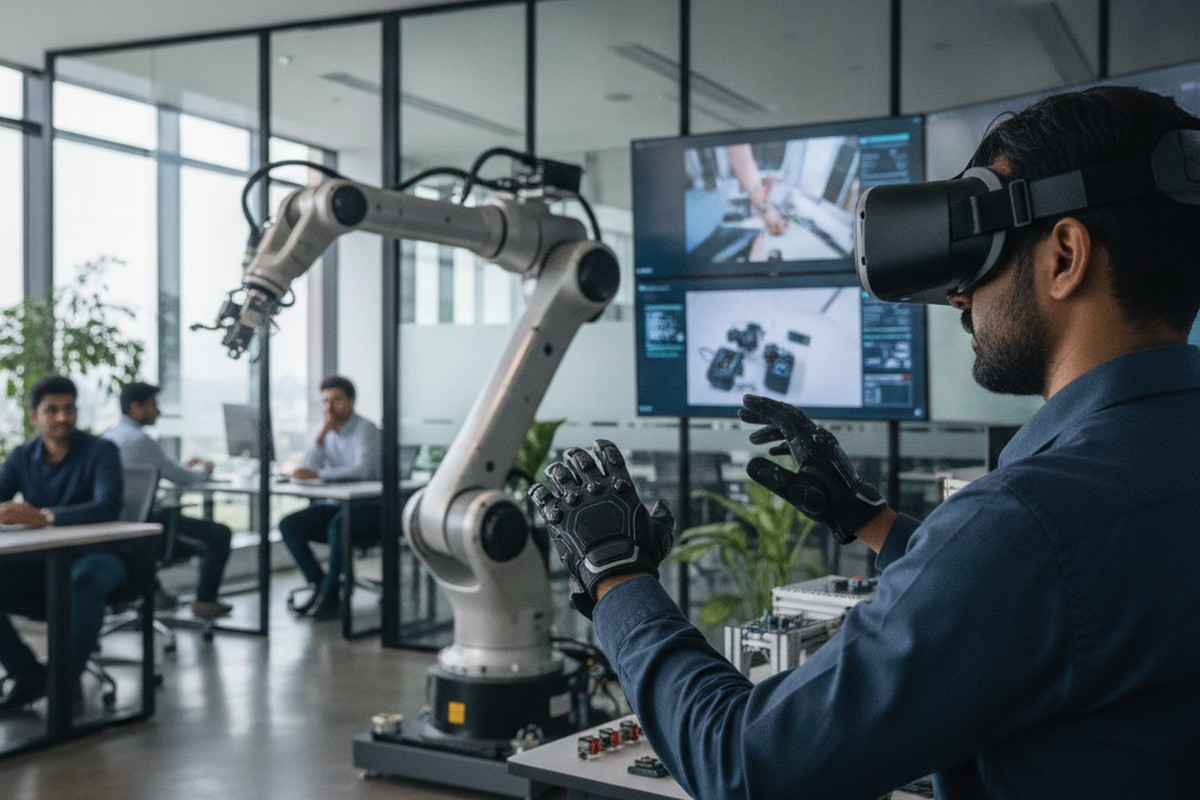
There is a second, subtler implication in that teleoperation economics from the opening scene. India’s cost advantage in skilled digital labour, $22 to $55 an hour for teleoperation and robot-training work against $65 to $120 in the US, is real and is already pulling offshore demand for embodied-AI data collection into Indian firms like Reliance-backed Addverb. That is a genuine, near-term opportunity, and one Indian policymakers and services companies are right to chase. But it sits on top of an uncomfortable irony: the same cost gap that makes India attractive for training humanoid robots is the gap that humanoid robots, once trained, are built to close. Executives building India strategy purely on where labour is cheapest today are underwriting a business case with an expiry date quietly written into the technology roadmap of the industry they are trying to serve. The more durable position, and the one PLI’s own design already gestures toward, is competing on the things a falling robot price cannot commoditise: engineering depth, quality systems, supply-chain reliability, and the institutional capability to absorb automation rather than be undercut by it.