

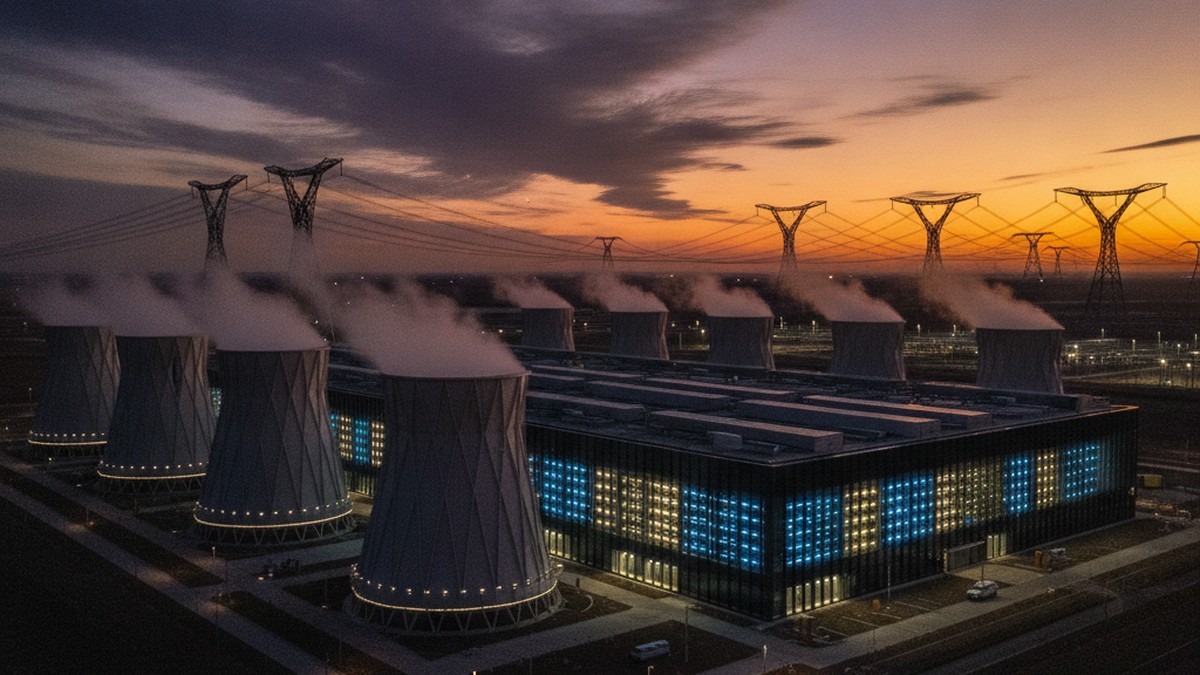
In September 2024, Constellation Energy announced it would reopen a reactor at Three Mile Island, the Pennsylvania site synonymous with America’s worst commercial nuclear accident, to sell its entire output to Microsoft under a twenty-year contract. A year later, Amazon signed on for 1.9 gigawatts from the Susquehanna nuclear plant through 2042. Google took stakes in small modular reactor developer Kairos Power and signed with a company called Elementl Power for at least 600 megawatts across three new sites. Meta committed to two decades of output from Constellation’s Clinton plant in Illinois. Between them, the four companies that built their fortunes on software have become some of the most consequential buyers of electrons in America.
This is not a sustainability initiative, and it is not a hedge against carbon pricing. It is a survival strategy. The binding constraint on the AI buildout has quietly shifted from chips to power, and the shift is rewriting the rules of competitive advantage in an industry that spent thirty years convincing itself infrastructure didn’t matter.
For most of the cloud computing era, the strategic logic ran in one direction: infrastructure gets abstracted away, and whoever owns the best software, data or customer relationship wins. AWS, Azure and Google Cloud existed precisely so that a bank, a retailer or a manufacturer never had to think about power substations or fibre routes. That assumption is now breaking down inside the very companies that built it. Training and running frontier AI models at scale requires gigawatt-class facilities that behave less like server rooms and more like aluminium smelters — a comparison the International Energy Agency uses without exaggeration. A single large data centre campus can draw as much power as a mid-sized city. Nvidia’s chip roadmap can double the compute per rack every two years; a regional grid cannot double its transmission capacity on anything like that timeline.
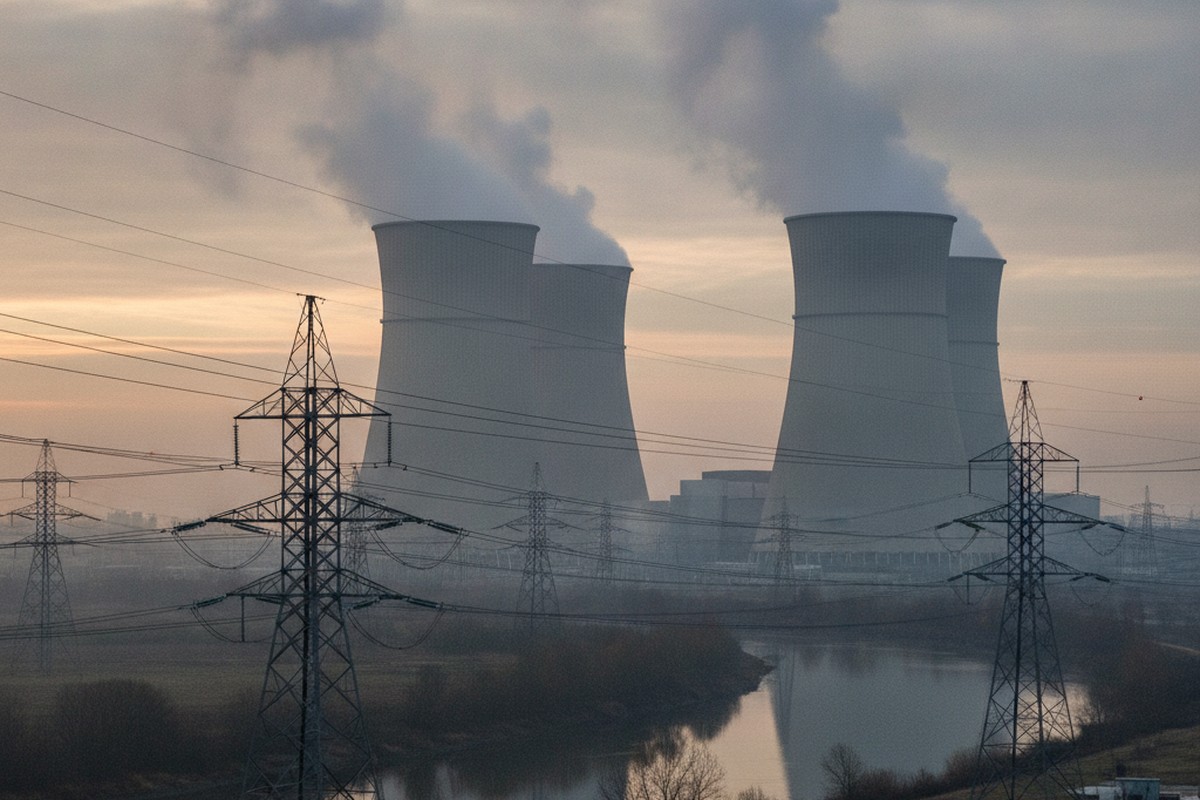
The numbers make the mismatch concrete. The IEA estimates global data centre electricity consumption will roughly double from 485 terawatt-hours in 2025 to 950 terawatt-hours by 2030, with AI-optimised facilities alone tripling their draw over the same period; AI data centre demand already surged 50 percent in 2025. S&P Global puts grid-connected data centre demand at 61.8 gigawatts by the end of 2025, climbing to 134.4 gigawatts by 2030 — more than double, in five years, what took decades to build. Grid interconnection queues, not GPU allocation, are now the more common reason a planned AI facility slips its launch date. Chips can be air-freighted. Substations and high-voltage transmission lines take years to permit and build, and nobody has found a way to compress that timeline with better software.
Why the hyperscalers are becoming utilities
What is genuinely new is not that AI needs power — every industrial technology has — but that the companies building AI infrastructure have concluded the only way to get firm power fast enough is to go around the existing utility model entirely. Twenty-year offtake agreements, direct investment in reactor restarts, equity stakes in reactor developers that don’t yet have an operating plant: this is the balance-sheet behaviour of an infrastructure fund, not a software company. It marks a return to a kind of vertical integration that the tech industry had spent a generation dismantling in the name of asset-light, capital-efficient growth.
Utilities are adjusting in ways that should worry any CEO who has treated cloud pricing as a stable input. American Electric Power’s Ohio subsidiary now requires large customers to commit to paying for at least 85 percent of the capacity they request, a rule that reportedly cut speculative interconnection applications from more than 30 gigawatts to 13 gigawatts almost overnight. AEP is lifting its five-year capital plan to roughly $70 billion partly to meet data centre demand. Multiple states — Oregon, Maryland, Georgia, Delaware, Oklahoma among them — are moving to separate data centre electricity tariffs from residential rates after a Bloomberg analysis found wholesale power costs running up to 267 percent higher in areas with heavy data centre activity than five years earlier. Oklahoma has floated an outright moratorium on new facilities pending impact studies. None of this shows up in a cloud vendor’s SLA, yet all of it determines whether a promised new compute region actually gets built on schedule, and at what price.
That is the strategic implication executives are underpricing. Most companies now treat their AI and cloud roadmap as a procurement decision — capacity, latency, cost per token. Few have asked their vendors where the power for a given region is actually coming from, how contested that grid connection is, or whether a state legislature is about to reallocate the cost of it. A company scaling AI-dependent operations into a specific cloud region is, whether it recognises this or not, also taking on exposure to that region’s energy politics. Boards that have spent two years debating AI governance, model risk and data provenance have mostly not yet added grid risk and energy-cost pass-through to that list. They should.
India’s counter-model
India offers a useful, non-obvious contrast, because the constraint is being addressed there by a different class of company altogether. In February 2026, Gautam Adani pledged $100 billion over a decade to build up to 5 gigawatts of AI data centre capacity — layered onto AdaniConneX’s roughly 2 gigawatts already operating — with the explicit intent of catalysing a further $150 billion in related investment. Crucially, the pledge is backed not by a purchase agreement with someone else’s utility but by Adani’s own 30-gigawatt Khavda renewable complex and a further $55 billion earmarked for generation and battery storage, alongside site-specific tie-ups with Google in Visakhapatnam and Microsoft in Noida. India’s data centre sector is projected to grow from roughly 1.4 gigawatts to 9 gigawatts of capacity by 2030, and government viability-gap funding is now underwriting battery storage projects to firm up renewable supply against baseload gas and coal.
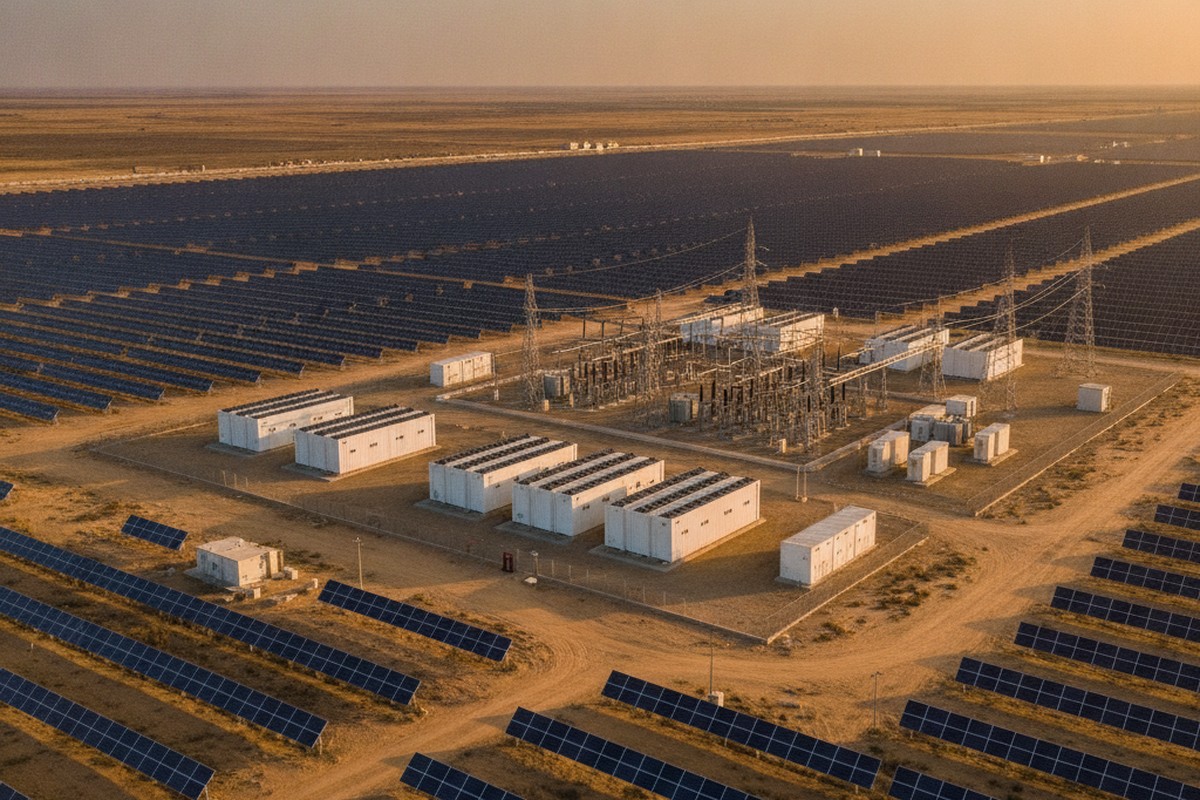
The implication is not that India has solved the problem — five metro clusters (Mumbai, Hyderabad, Delhi NCR, Bengaluru, Chennai) concentrate demand in ways that risk the same localised grid strain seen in Virginia, and half of India’s gas needs are still met by imports exposed to global price shocks. The implication is structural: where American hyperscalers had to build their way into an incumbent utility system that was not designed for them, an Indian industrial conglomerate that already controls power generation, land acquisition and renewable buildout at scale can offer AI infrastructure as a bundled proposition from day one. It inverts the last two decades’ assumption that asset-light platform companies out-compete asset-heavy industrial ones. When the scarce input reverts to something physical — land, transmission rights, firm generation — the advantage can shift back to whoever already owns the physical asset base, not whoever writes the best software.
For CEOs and CXOs outside the technology sector, the lesson is less about nuclear reactors than about what they reveal. Capital allocation for anything AI-dependent now needs a multi-year view of where new capacity can physically be energised, not just where it is cheapest to license. Site selection, for any company building serious internal AI infrastructure, has quietly rejoined tax incentives and talent availability as a variable that includes grid queue position and political tolerance for rising local electricity bills. And industrial companies sitting on underused energy or land assets — the utilities, the conglomerates, the infrastructure funds — may hold options in the AI economy that look nothing like technology stocks but could end up mattering just as much. The AI race was framed as a contest of algorithms. Increasingly, it is a contest of electrons, permits and the political patience of the people whose electricity bills are quietly subsidising it.