

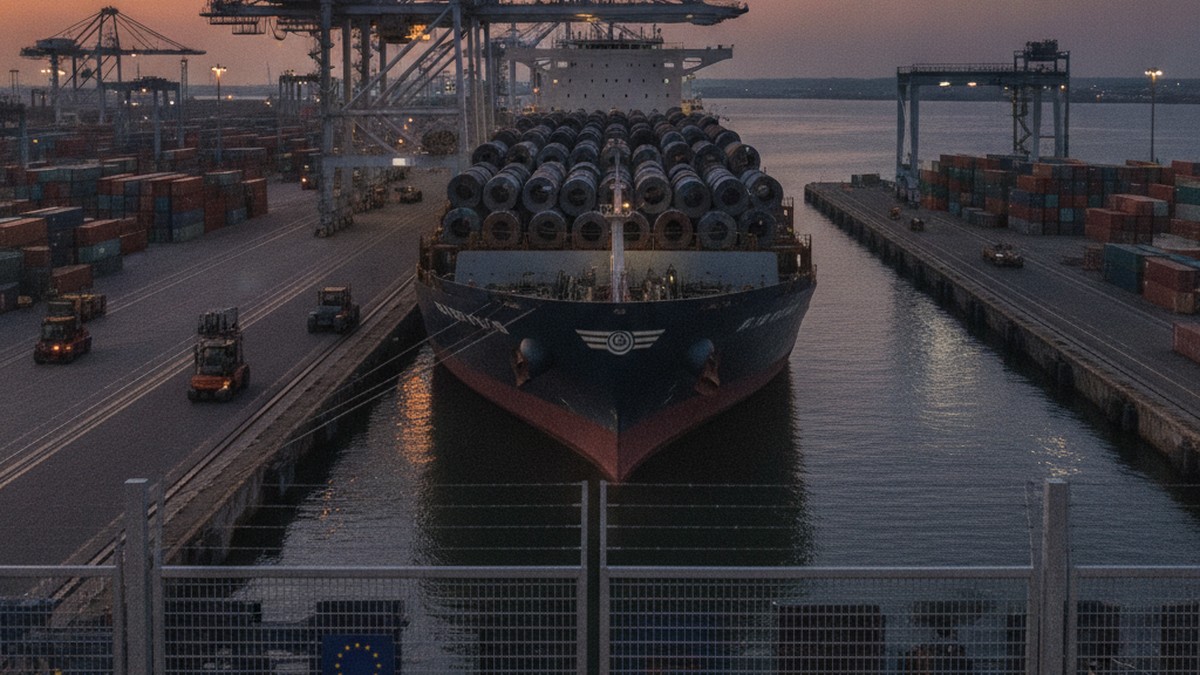
On January 1, 2026, the European Union quietly finished building something most boardrooms still describe, incorrectly, as a tariff. The Carbon Border Adjustment Mechanism moved from its three-year reporting trial into what Brussels calls the “definitive regime”: importers of steel, aluminium, cement, fertilisers, hydrogen and electricity into the EU must now hold a CBAM authorisation to bring the goods in at all, and must surrender certificates priced against the EU’s own emissions trading market to cover the embedded carbon in every shipment. The certificate price for the first two quarters of 2026 has settled around €75 a tonne of CO2, tracked directly to EU ETS auction clearings. Settlement of the certificates themselves doesn’t fall due until 2027. That gap, between exposure accruing now and cash leaving the business later, is exactly the kind of deadline executives are trained to deprioritise. It is also exactly the kind they shouldn’t.
Most companies exporting into Europe are still treating CBAM as a pricing problem: a new cost line to pass through, absorb, or lobby against. That is a category error, and it is going to be an expensive one. CBAM was designed to close a carbon-price gap, but what it has actually built, almost as a side effect, is the first global trade regime where market access depends on the quality of a company’s emissions data rather than on the price or quality of the product itself. For the CEOs of exporting businesses, and for anyone who supplies them, that distinction is the whole story.
The measurement problem is the real problem
Here is the mechanism most coverage skips. When an exporter cannot supply verified, installation-level emissions data, the EU does not simply decline to charge a carbon price. It applies a default value, set deliberately high, calibrated to the worst-performing plants in that product category globally. A steel producer running a modern, well-documented electric arc furnace and a producer running an old blast furnace with patchy monitoring can end up paying the same certificate bill, because the second one has no way to prove it is cleaner. India’s Global Trade Research Initiative estimates that exporters without verified data may need to cut prices by 15 to 22 percent simply to stay competitive after the certificate cost lands, with small and mid-sized manufacturers absorbing the worst of it because verification and third-party auditing are themselves expensive. Projections now circulating in Indian trade policy circles put the cost of Indian steel exports to the EU at $210 to $243 a tonne by 2034 under current trajectories. That is not a rounding error on margin. For a mid-sized exporter, it is the difference between a viable EU order book and none at all.
Note what this does structurally. It doesn’t just tax carbon; it rewards companies that have already invested in granular, auditable measurement, and it punishes companies that haven’t, independent of how clean their actual process might be. A Turkish, Vietnamese or Indian mill that has quietly digitised furnace-level emissions tracking over the past three years now has a real, defensible cost advantage over a domestic competitor that hasn’t, even if their smokestacks look identical. Carbon intensity used to be an ESG talking point for the sustainability team’s annual report. It has just become a hard input into unit economics, decided by whoever can produce cleaner data, not necessarily whoever runs the cleaner plant.
Why lobbying won’t buy you time
India, alongside China, Brazil and South Africa, has taken the fight to the WTO, arguing CBAM breaches most-favoured-nation and national-treatment principles by charging different effective rates depending on a country’s domestic carbon-pricing regime. India’s finance minister has called the mechanism “unilateral, arbitrary, and a trade barrier.” The legal argument has some force. It also has a timeline problem: WTO disputes of this complexity typically run years, the EU is defending under the environmental exception in GATT Article XX, and precedent from cases like Shrimp-Turtle suggests Brussels has built CBAM carefully enough to survive a challenge, or at least outlast one. Executives who are quietly waiting for a legal or diplomatic rescue are making a bet on a timeline that does not match their next three earnings cycles.
The trade-diversion option looks more immediate and is proving less useful than it appears. Indian steel and aluminium exporters have started redirecting volumes toward the Middle East and other parts of Asia to reduce EU exposure. That works as a pressure release for exactly as long as those markets stay indifferent to carbon intensity. They won’t. The UK has its own carbon border mechanism arriving, several Asian markets are studying versions of the same architecture, and buyers everywhere, not just regulators, are starting to ask suppliers for verified emissions data as a matter of course, because their own customers are asking them. Rerouting cargo doesn’t solve the measurement problem; it just postpones the moment a market asks the same question the EU is already asking.
What actually changes at the top of the organisation
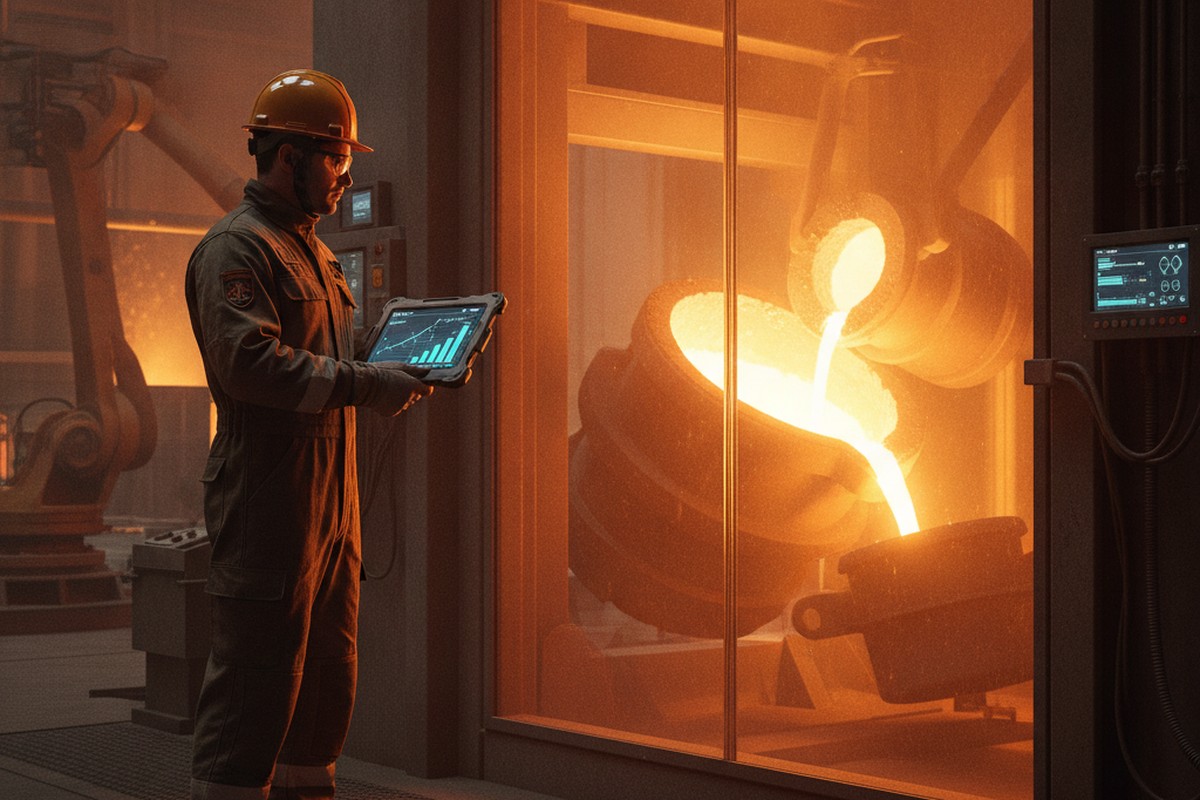
The companies handling this well are not the ones with the best government-affairs teams. They are the ones that moved emissions measurement out of the sustainability function and into finance and supply chain, treating a verified carbon footprint the way they treat an audited balance sheet: something the CFO signs off on, something procurement uses to select suppliers, something that shows up in the same spreadsheet as landed cost. Tata Steel and JSW have both been accelerating electric-arc-furnace and green-hydrogen investment partly for exactly this reason: a documented, low, verifiable carbon intensity is turning into a pricing weapon against domestic and export rivals alike, not just a compliance shield.
There is a governance implication here that boards have been slow to absorb. If carbon data is now a determinant of market access and margin, an unverified or estimated emissions figure is a material business risk in the same category as an unhedged currency exposure or an unaudited receivable, and it deserves the same scrutiny at the audit committee level. Very few boards currently ask to see supplier-level or plant-level emissions data with the rigour they apply to working capital. That gap is where the next unpleasant earnings-call surprise is most likely to come from, for any business with meaningful exposure to the EU, the UK, or wherever this logic spreads next.
The uncomfortable reframe for any CEO running an export-exposed business is this: CBAM was never really about pricing carbon. It is a live test of whether your organisation can produce trustworthy data about itself faster than a regulator, or a customer, forces you to. Companies that pass that test are quietly gaining a structural edge that has nothing to do with subsidies, tariffs, or trade deals, and everything to do with who controls better information about their own operations. Everyone else is going to keep discovering, one quarter at a time, that the bill for not knowing was always going to be larger than the bill for finding out.