

Every CEO who has ever sat through a capital allocation review knows the quiet power of a single assumption buried in a footnote. Change the useful life of an asset by even a year, and profit, tax, covenant headroom and the story you tell investors all shift with it. That is precisely the argument now dividing Wall Street, Washington and increasingly the boardrooms of companies that have never bought a GPU in their lives: how long does an AI chip actually last, and who gets to decide?
It sounds like an obscure accounting dispute. It isn’t. Microsoft, Alphabet, Meta, Amazon and Oracle are on track to spend roughly $725 billion on capital expenditure in 2026, up 77 percent from the prior year, according to analyst compilations of company guidance. Almost all of that money is going into data centres and the silicon inside them. How that spending gets depreciated, over three years or six, determines whether these companies look like they are printing extraordinary profit from AI or barely covering their cost of capital. For a CEO in Mumbai, Frankfurt or São Paulo who has never touched a hyperscaler balance sheet, the outcome of this fight will still shape borrowing costs, the price of enterprise AI services and, more importantly, the assumptions their own finance teams may soon be encouraged to adopt for their own AI infrastructure bets.
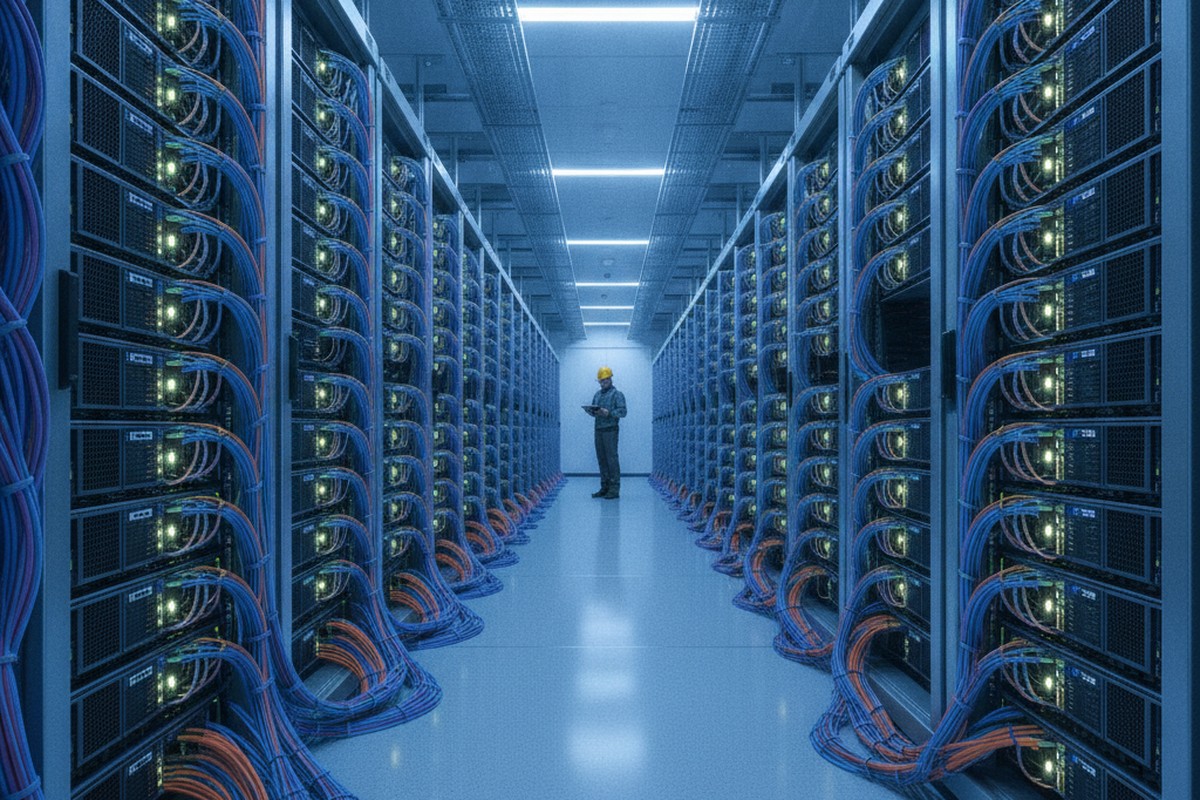
The dispute became public in November 2025, when investor Michael Burry, of “The Big Short” fame, published an argument that hyperscalers had quietly extended the useful life of servers and AI chips over the past several years, understating depreciation and inflating reported earnings by what he estimated at 20 to 27 percent. His most provocative number: a cumulative asset overstatement approaching $226 billion by 2028 if the current assumptions hold, built on the premise that AI accelerators are more realistically five-year, or even 2.5-year, assets rather than the six-year schedules some companies now use. Oracle, in his telling, was the most exposed, given the scale of its AI infrastructure commitments relative to its balance sheet.
The companies’ defenders make a case that is not merely self-serving. GPUs bought for frontier model training in year one do not become worthless in year three; they cascade down the value chain into lower-latency inference, then batch processing and analytics, extracting revenue-generating work for years after their peak usefulness has passed. Amazon extended server depreciation from three to four years back in 2020, well before the current AI cycle, and most hyperscalers had already converged on longer schedules by 2023 and 2024, based on real fleet data rather than a hopeful new estimate cooked up to flatter this quarter’s numbers. There is a reasonable version of this argument, and reasonable people, including some sober-minded industry analysts, have made it.
But reasonable is not the same as verifiable, and that is the part that should unsettle any executive who has to sign off on his or her own company’s estimates. Useful life is not a fact; it is a forecast, made by the same management teams whose compensation and equity story benefit from a rosier one. Nobody outside these companies has full visibility into fleet-level failure rates, obsolescence curves or the residual value that six-year-old accelerators will actually command in a secondary market that barely exists yet, because this generation of hardware hasn’t finished depreciating even once. The assumption gets tested only when it’s too late to matter for the quarters already reported.
What makes this more than a hyperscaler problem is what has been happening in parallel, largely away from earnings calls: the shift of AI infrastructure financing off balance sheets entirely. Meta’s roughly $30 billion joint venture with Blue Owl Capital to build its Hyperion data centre campus in Louisiana is structured through a purpose-built special purpose vehicle issuing tens of billions in long-dated notes, an arrangement that keeps the debt off Meta’s own balance sheet even as the company retains the economic benefit of the facility. Multiply that structure across the industry and, by some analyst estimates, roughly $1.65 trillion in AI-related obligations may now sit in leases and joint ventures that never touch a hyperscaler’s own debt schedule. Bond markets have started to notice: Oracle’s credit default swaps hit an 18-year high in July 2026 even as the company insisted its credit metrics remained sound, and five major tech firms raised close to $302 billion in debt and equity by the same month, pushing Goldman Sachs’ full-year AI-related bond and loan issuance estimate to $489 billion, well past what the bank had projected only months earlier.
Put the two threads together and a pattern emerges that should matter enormously to anyone allocating capital right now, in any industry. Extend the useful life of the asset, and reported earnings look stronger than the cash economics justify. Move the debt into an off-balance-sheet structure, and the leverage looks lighter than the obligation actually is. Neither move is illegal, and neither is even necessarily wrong. But together they mean that the two numbers a CEO would normally check to sanity-test a capital-intensive bet, reported profit and reported debt, are both being managed in ways that make this cycle look healthier than the underlying cash flows might otherwise suggest. Alphabet posted its first negative free cash flow quarter since 2004 in the middle of this spending surge. That is the number that doesn’t bend to an accounting assumption.
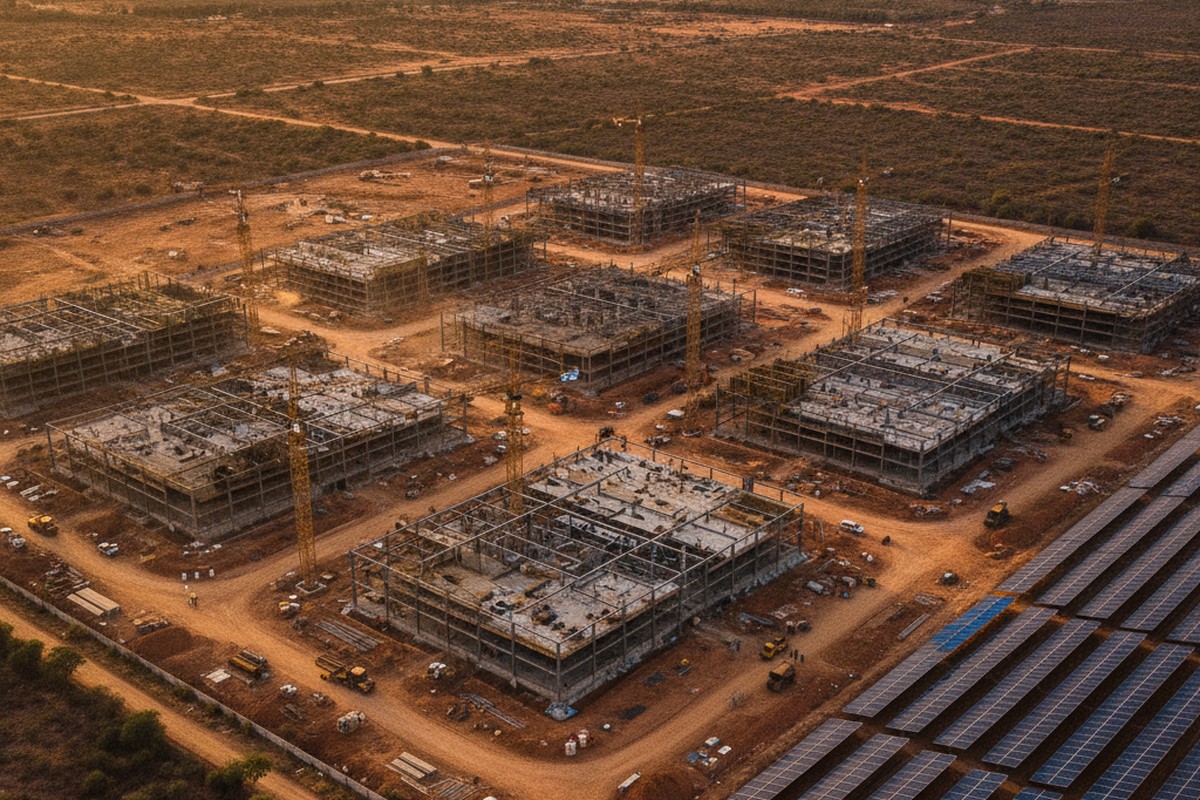
This is where the story becomes an India story too, and not because Indian companies are the ones under scrutiny. India’s own data centre buildout has moved from ambition to genuine scale: Adani’s roughly $15 billion, five-year campus with Google in Visakhapatnam, Reliance’s multibillion-dollar AI facility planned for Jamnagar, and TCS committing an estimated $6 to $7 billion to a gigawatt-class sovereign cloud subsidiary all represent Indian capital now facing exactly the same useful-life question that Burry raised about Microsoft and Meta. Indian accounting standards under Ind AS 16 require companies to review the useful life of an asset at least annually and adjust depreciation prospectively when estimates change, which means Indian CFOs building AI infrastructure will soon be making the same judgment calls, with the same incentive to lean optimistic, and with less analyst scrutiny than their American counterparts currently receive. A market that has watched IL&FS and other credit events unfold around opaque financing structures should be more alert than most to what happens when large infrastructure bets are financed through vehicles that sit just outside the primary balance sheet.
None of this means the AI infrastructure build is a mirage, or that every hyperscaler’s depreciation schedule is fraudulent, as Burry has more provocatively suggested. Compute genuinely is scarce, enterprise adoption of AI tools is real and accelerating, and much of this capital expenditure will generate durable returns over a decade, not a single accounting cycle. The point for any CEO or CFO watching this fight from the outside is narrower and more useful: this is a live case study in how quickly the underlying economics of a capital-intensive boom can be obscured by choices that are individually defensible and collectively opaque. Every board currently approving large capital commitments tied to AI, whether that’s GPU clusters, sovereign cloud regions, or long-term compute contracts, should be asking its own finance function two specific questions before the next capex cycle is approved: what would our reported profitability look like under a materially shorter useful-life assumption, and how much of our AI-related financing currently sits somewhere our own balance sheet doesn’t show.
The executives who get ahead of this won’t be the ones who bet correctly on whether GPUs last three years or six. They will be the ones who built enough transparency into their own numbers that when this debate is finally settled, by an auditor, a regulator, or simply by the hardware wearing out on schedule, their credibility isn’t the casualty.