

In April 2025, Bajaj Auto’s leadership told reporters that a batch of Chinese paperwork was about to shut down part of its production line. Not a chip shortage, not a shipping crisis, not a cyberattack. A licensing form. China had tightened export approvals on rare earth magnets, the small, extraordinarily powerful components that sit inside every electric motor, and Indian carmakers who had spent a decade optimising for cost suddenly discovered they had no idea how exposed they were. Sona Comstar, India’s largest importer of the magnets, was bringing in 120 tonnes a year and had plans to nearly double that. TVS Motor warned of impact within weeks. For a few tense months, an industry that prides itself on lean, just-in-time supply chains was reduced to lobbying for import duty relief on a mineral most executives outside procurement had never had to think about.
That episode, repeated in miniature across Japan, Germany and the United States over the past eighteen months, has produced a consensus so widespread it barely gets argued anymore: the world over-relied on China for rare earths and critical minerals, and it needs to diversify. Governments have responded with price floors, offtake guarantees, joint mining ventures and national magnet schemes. Executives have added “supply chain resilience” to strategy decks with the confidence they once reserved for “digital transformation.” The trouble is that most of what currently passes for de-risking is being built at the wrong layer of the supply chain, financed in a way that manufactures new single points of failure, and timed against a geopolitical cycle that makes the underlying economics almost impossible to plan around.
Mining was never the chokepoint
The comforting part of the rare earth story, the part that gets repeated in boardrooms, is that these elements aren’t actually rare. Cerium and lanthanum are more abundant in the earth’s crust than lead. Deposits exist in Australia, the United States, Vietnam, Brazil and India. If the issue is geology, then the fix is obvious: find more mines outside China, and the leverage evaporates.
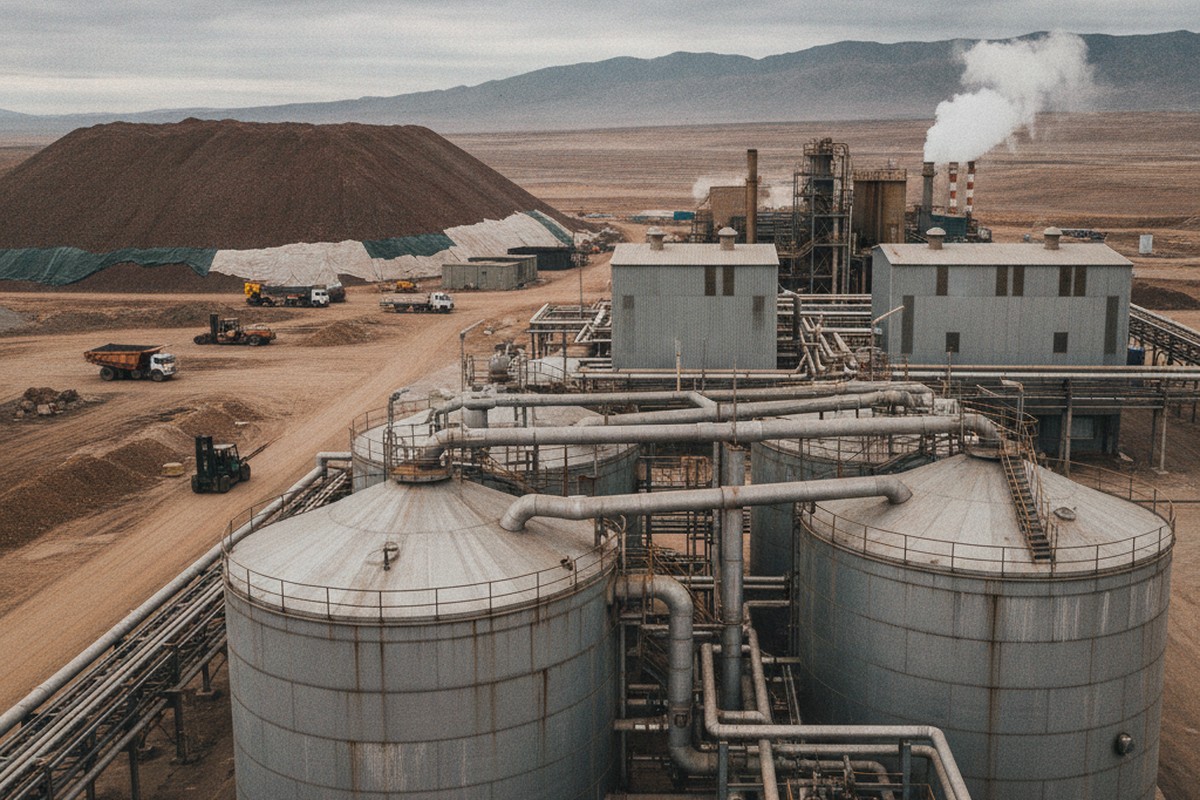
It is not the issue. The International Energy Agency’s critical minerals tracking shows China controlling refining and separation for nineteen of twenty strategic minerals it monitors, with roughly 70 percent average market share at that stage specifically, not at extraction. And that concentration has been getting worse, not better, even as mining diversifies: the three largest refining countries increased their combined share of processing from 82 percent in 2020 to 86 percent by 2024. Ore from an Australian or Vietnamese mine still has to go somewhere to be separated into usable oxides, and for the large majority of heavy rare earths, that somewhere is still China. Industry analysts have started calling this the “missing middle,” the unglamorous, capital-intensive, chemically brutal process of turning a bucket of mixed rare earth ore into the specific separated elements, like dysprosium and terbium, that actually go into a magnet.
Building that missing middle outside China is not a mining problem, it’s an industrial-ecosystem problem. Separation plants need reliable power at scale, water, waste-handling infrastructure tuned to genuinely hazardous byproducts, and process-chemistry expertise that most Western economies let atrophy over thirty years. None of that gets fixed by writing checks to junior miners. It gets fixed over a decade, if it gets fixed at all, and every year in between remains a year of dependency on the exact chokepoint everyone claims to be escaping.
The single-champion trap
Washington’s answer has been the most aggressive intervention: a Pentagon-backed price floor of $100 per kilogram for neodymium and praseodymium paid to MP Materials, well above a market price that has recently sat closer to $70, plus a commitment to guarantee at least $140 million a year in EBITDA for the company’s new magnet facility through an offtake agreement. It is, by the standards of American industrial policy over the past forty years, an extraordinary intervention, and it has done what it was designed to do: it gave one company the confidence to build capacity that private capital alone would not have financed.
It has also created a new and different fragility. Analysts at the Royal United Services Institute have pointed out the obvious tension: concentrating state backing in a single producer risks squeezing out other domestic magnet makers who lack the same guarantee, effectively trading dependency on a foreign monopoly for dependency on a subsidised domestic one. If MP Materials underperforms, faces an operational disruption, or simply cannot scale output as fast as demand requires, the United States hasn’t diversified its risk, it has relocated it. Meanwhile, competitors who can still source cheaper Chinese material retain a structural cost advantage over anyone doing the harder, more expensive work of building an alternative. Strategic dependency on China, as the RUSI analysis puts it bluntly, “won’t be broken by a single investment.”
This is the pattern to watch in any industry facing similar concentration risk: state-backed national champions solve the financing problem for one company while doing little to build a resilient, competitive market. CEOs should be asking whether their “diversified” supplier list actually diversifies risk, or just adds counterparties who all depend on the same unaddressed chokepoints upstream.
Policy whiplash makes the economics worse
Layered on top of the structural problem is a political one that may be even harder for executives to plan around. In November 2025, China suspended its own toughest October export directives, including extraterritorial licensing requirements on foreign-made products containing Chinese-origin rare earths, following talks between Presidents Trump and Xi. The suspension runs only until late November 2026, and the underlying legal architecture for tighter controls remains fully in place. China’s own export data tells the real story: rare earth compound and metal shipments fell to roughly 4,400 tonnes in December 2025, down nearly 16 percent from the year’s monthly average, even as the broader posture nominally “relaxed.”
That is not a market executives can build a ten-year discounted cash flow model around. It is one where the rules can tighten, loosen and tighten again within a single fiscal year for reasons that have nothing to do with the economics of magnets or motors. Under those conditions, rational private capital won’t fund the missing middle at the pace governments want, because the payback period for a separation plant is measured in decades while the policy environment that determines its competitiveness can flip in a single diplomatic phone call. Every national scheme currently being announced, from Washington to Canberra to Delhi, is effectively betting that this cycle of escalation and pause resolves in its favour before the money runs out.
India’s version of the same trap
India offers a useful, less-examined case study of exactly this dynamic. The government has set a target of launching domestic rare earth permanent magnet production by December 2026, working with the Hyderabad-based Nonferrous Materials Technology Centre to transfer indigenous processing technology to private manufacturers, against a backdrop of roughly 95 percent import dependency on critical minerals overall. More than twenty companies have bid into the government’s incentive scheme for magnet manufacturing.
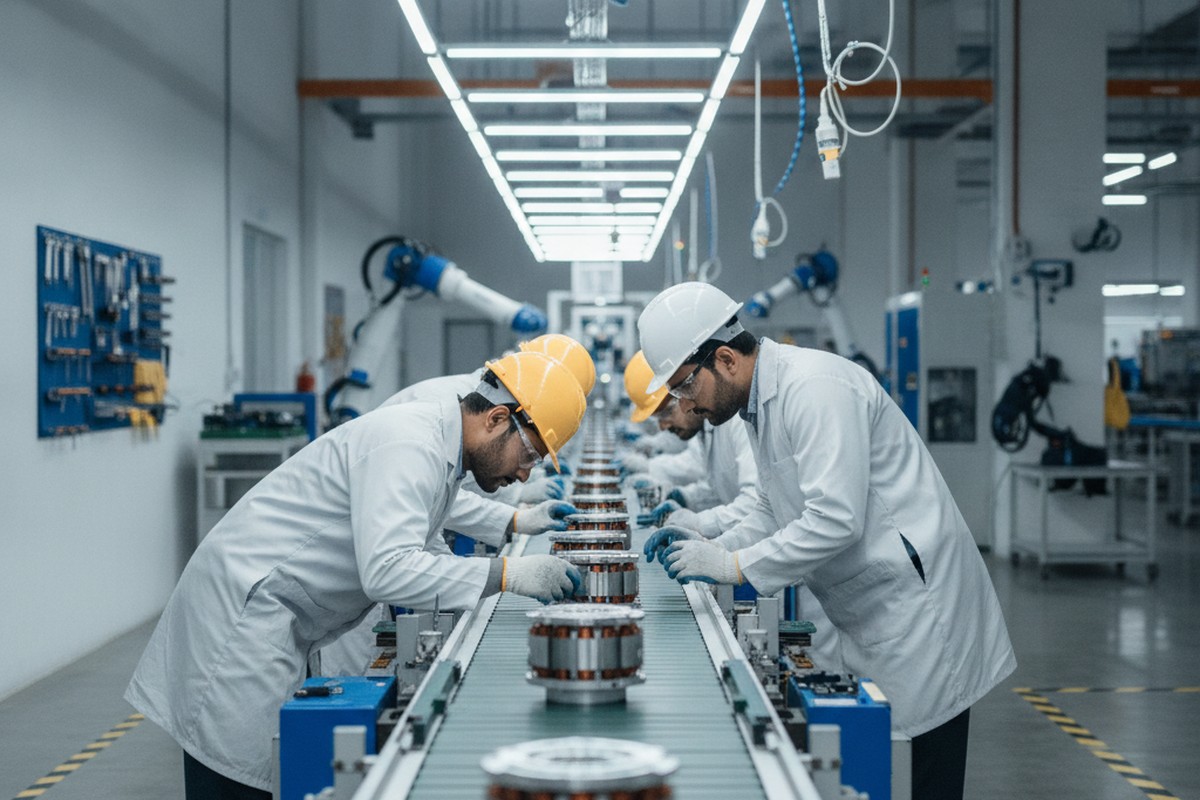
The ambition is real, but so is the gap underneath it. Annual production capacity under the scheme hasn’t been specified, heavy rare earth supply (the dysprosium and terbium that make magnets viable at high temperatures) remains uncertain, and much of the separation capability feeding finished magnet production may still depend on imported oxides even after assembly localises. India risks building the visible, headline-friendly layer of the supply chain while leaving the actual chokepoint, separation and refining, exactly where it was. A magnet factory that still needs Chinese-processed oxide inputs is a symbolic win and a strategic non-event.
What this means for how executives should actually respond
The instinct to add supplier diversity to a procurement dashboard and call the risk managed is understandable, and almost certainly insufficient. Three adjustments matter more than geography of sourcing. First, treat critical mineral exposure the way a sophisticated treasury team treats currency risk: hedged with inventory buffers, long-term contracts with price collars, and scenario planning for multi-month disruptions, rather than something a single alternate supplier eliminates. Second, push engineering teams harder on demand-side redesign; several motor manufacturers, including Tesla, have already shown that reducing or eliminating heavy rare earth content in traction motors is a genuine, if costly, alternative to sourcing around the constraint, and it deserves the same capital scrutiny as any supply-side fix. Third, evaluate national schemes and champions for what they actually de-risk rather than what they announce: a magnet plant without secured upstream separation capacity, whether in Ohio or Hyderabad, is not resilience, it’s a second dependency wearing a domestic flag.
The companies that will be best positioned in five years are unlikely to be the ones that found the cheapest new mine. They will be the ones that correctly identified where the real chokepoint sat, refining, not extraction, and either helped build capacity there, secured contractual access to it, or engineered their way around needing it at all. Everyone else will have spent heavily on the appearance of resilience while leaving the actual leverage exactly where they found it.